Google AI Mode Ads: What Advertisers Can And Cannot Control
Ads now run inside Google AI Mode in eleven markets, and in the US they follow the user into the next question. Your Search campaigns are already in. Here is what you control, what you do not, and what to change before 2027 budgets are set.
Paid mediaNov 10, 20267 min read By Umair Ansari
On this page
- What Changed In The Last Two Weeks
- The Timeline So Far
- You Are Already Opted In
- How An Ad Gets Matched To An Answer
- What You Will Not See In Reports
- How Much Weight To Put On Google's Numbers
- What We Are Changing In Client Accounts
- A Four-Week Check For Your Own Account
- How To Plan 2027 Budgets Around It
- Sources
What Changed In The Last Two Weeks
On October 28, 2026 Google said ads in AI Mode are expanding beyond the US to Australia, Canada, India, Kenya, Malaysia, New Zealand, Nigeria, Pakistan, the Philippines and Singapore, with Brazil, Mexico and the UK planned for the fourth quarter. In the US it also launched multiturn ads, which can appear on follow-up questions inside the same AI Mode conversation. PPC Land has the full breakdown of the announcement and the help page.
Two days later OpenAI changed a default on its side. According to DesignRush's roundup of the help page update, ChatGPT Ads turned on "creative enhancements" for new and existing self-serve campaigns on October 30. The system can rewrite headlines and descriptions, translate text, resize images and adjust destination URLs unless you switch it off.
The pattern is the same on both platforms. The ad surface moved inside the answer, and more of the ad is assembled by the platform.
The Timeline So Far
- October 3, 2024. Ads in AI Overviews launch for US mobile users.
- October 30, 2025. Google confirms that experiments with ads in AI Mode have started.
- February 11, 2026. Shopping ads are introduced in AI Mode.
- May 20, 2026. Conversational Discovery ads and Highlighted Answers are announced for US testing at Google Marketing Live.
- August 31, 2026. Shopping ads move into the body of AI Mode answers.
- October 28, 2026. Ads in AI Mode expand to ten more countries and multiturn ads launch in the US.
Each step moved the ad closer to the answer. The dates come from PPC Land's record of the rollout.
You Are Already Opted In
There is no new campaign type to launch. Existing Search, Shopping and Performance Max campaigns are eligible for AI Overviews and AI Mode automatically, with no extra setup or budget. You cannot opt out of AI Mode separately from Search, and you cannot target it on its own.
Match type decides how far your ads travel:
- Exact and phrase match are eligible only when the query shows clear commercial intent.
- Broad match, AI Max, Shopping and Performance Max can also be matched to the context of a longer, exploratory question.
Google can also place a short AI-written explainer next to an ad. Advertisers cannot write it, edit it, approve it or turn it off. Negative keywords, asset pinning and brand exclusions still apply, so those are now your main steering tools.
How An Ad Gets Matched To An Answer
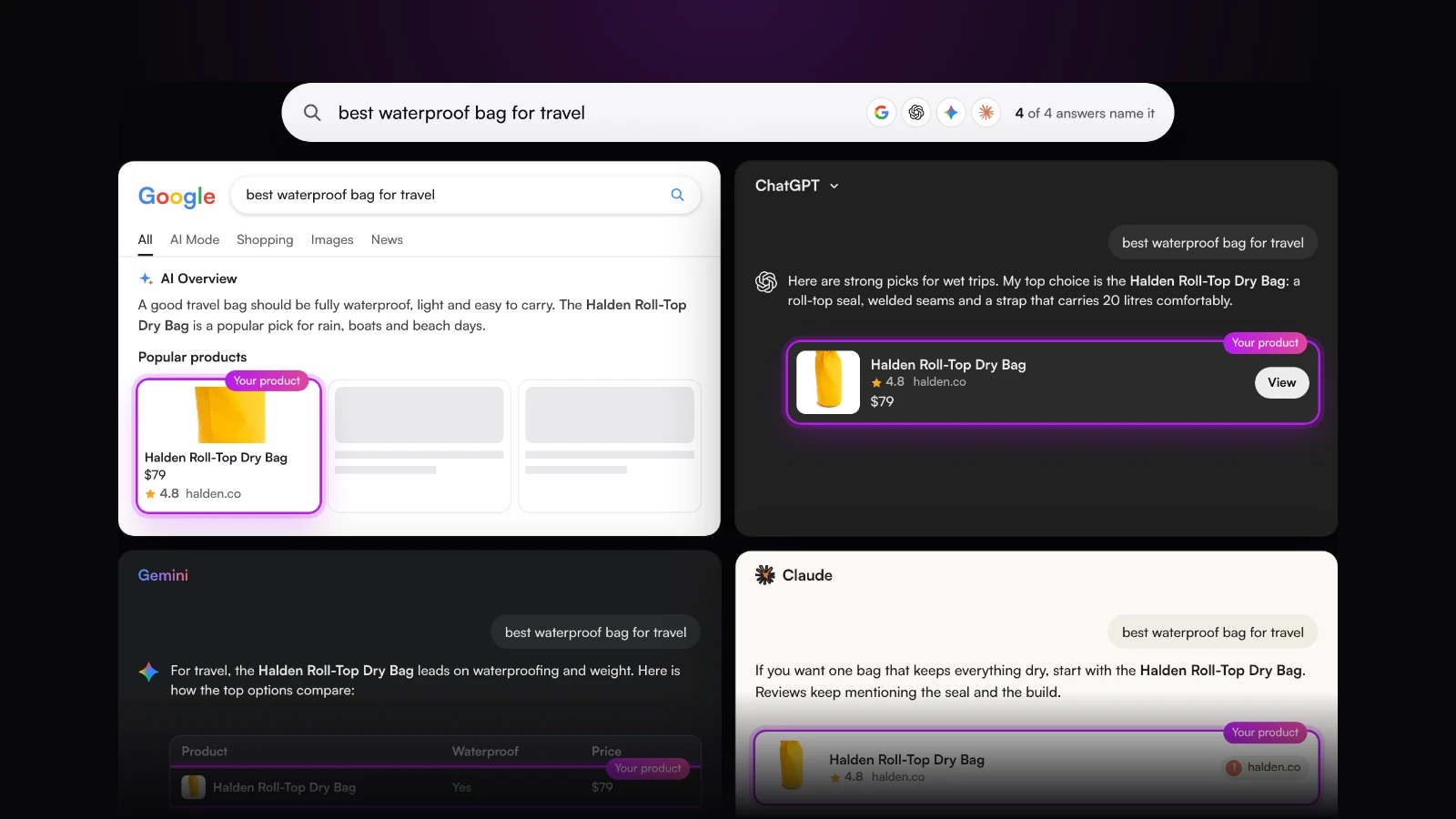
Google describes two ways an ad can enter AI Mode. With direct query matching, the question carries clear commercial intent and the ad is matched to the query, much as it is in Search. With contextual matching, used for longer or exploratory questions, the ad is matched to the query and to the AI-generated response together. Your ad can appear because of what the answer said, not only because of what the user typed.
The formats are familiar. Text ads and Shopping ads can show in AI Overviews and AI Mode, each with a Sponsored label, and Google is experimenting with local inventory ads and vehicle ads. English is the only listed language so far, and the help page marks Pakistan as text ads only.
Two more details are worth knowing. Google says paid ads do not influence the organic AI response, and being cited in an answer does not affect eligibility in the ad auction, so the two are separate systems that share a screen. And when ads in AI Overviews went international in December 2025, Google excluded sensitive categories including alcohol, gambling, finance, healthcare and politics. The October announcement does not say whether the same exclusions apply to AI Mode in the new markets, so regulated advertisers should check before assuming either way.
What You Will Not See In Reports
AI Mode and AI Overviews data is folded into standard campaign reporting. There is no AI Mode segment, and search terms are shown in aggregate. Billing follows the normal Search model.
That means you cannot answer "how did AI Mode perform" from the Google Ads interface. Google has shared a few numbers of its own: AI Mode queries run about three times the length of traditional searches, follow-up queries in the US grew more than 40% a month on average, and click-through rates on sponsored and organic product listings in AI Mode are described as similar. None of that is account-level data.
Independent data points the other way on volume. A Productrise study of more than 100,000 queries, cited in the same PPC Land report, found AI Mode showed products on about 23% of tracked shopping queries, against about 88% in standard search, with 4.3 listings where products appeared against 22.5. Fewer slots, longer questions.
How Much Weight To Put On Google's Numbers
Read the supporting figures closely before you repeat them in a budget meeting. PPC Land's analysis points out that the click-through claim rests on internal US data from a 15-day window, August 20 to September 3, 2026. It covers product list items only and comes with no published rates or volumes. Shopping ads moved into the body of AI Mode answers on August 31, inside that window. The query-length figure is US data and has not been updated since February.
The independent Productrise figures have limits too: US and UK queries, 21 days, July 2026. Neither side has shown how an AI Mode click converts against a standard Search click. Until someone does, the fair reading is that this is new inventory with unproven value, bought automatically at Search prices.
The business context is plain. The expansion was announced on the day Alphabet reported third-quarter results, with Search and other revenue up 12% to 63.35 billion dollars.
What We Are Changing In Client Accounts
We run paid media alongside SEO and AI search work for clients, so both halves of this land on the same desk. This is the checklist we are working through.
- Audit match types by intent. Broad match and AI Max now reach research-stage questions. Keep them where the landing page can answer a question, and hold exact and phrase on the terms that must stay tight.
- Rebuild negatives and brand exclusions. With no placement control, exclusions are the only fence. Review them monthly, not yearly.
- Fix the feed before the ad. Shopping ads in AI Mode pull from Merchant Center. Titles, attributes, price and availability carry more weight when only four listings show.
- Write landing pages for the longer question. A user who asked a forty-word question expects the page to continue the answer, not restart the pitch.
- Measure with holdouts. Since the platform will not split AI Mode out, use geo holdouts or before and after windows against revenue, the method we set out in the paid media budget playbook.
- Check the ChatGPT Ads toggle. If headlines need legal or brand approval, turn creative enhancements off at account or campaign level, and test that tracking parameters survive any URL change.
- Label AI-made creative. If your ads use AI-generated images or video, the same accounts now carry disclosure settings. See what brands must label.
A Four-Week Check For Your Own Account
You cannot isolate AI Mode in reports, but you can look for its fingerprints.
- Week one, baseline. Export the search terms report for the last 90 days. Tag each term by word count and by match type. Long, question-style terms served by broad match, AI Max or Performance Max are the closest proxy you have for conversational placements.
- Week two, fences. Add negatives for research questions your pages cannot answer, review brand exclusions, and pin the headlines that must always show.
- Week three, pages and feed. Take the five landing pages that receive the longest queries and rewrite the opening so it answers the question. Fix feed titles and attributes for the products behind most of your Shopping spend.
- Week four, readout. Compare cost per conversion and revenue for long queries against short ones, before and after. If long queries cost more and convert less, tighten match types. If they hold up, you have found reach your competitors are still ignoring.
How To Plan 2027 Budgets Around It
Do not carve out an "AI ads" line yet. You cannot buy the placement separately, so a separate budget would be a label with nothing behind it. Plan around three things you can control.
First, protect the organic half. The ad sits beside an AI answer, and the brands named in that answer take the trust. Our AI search playbook covers how answers pick their sources. Second, budget for creative and feed work, because the platform is now assembling more of the ad from your raw material. Third, keep a testing reserve. Formats are changing month by month, and the advertisers who learn first pay the least for the lesson. The marketing budget calculator has a testing reserve built into the split.
Sources
- PPC Land: Advertisers in 10 more countries cannot opt out of Google's AI Mode ads, November 1, 2026
- DesignRush AI roundup: ChatGPT Ads defaults and AI Mode ad markets, November 5, 2026
Related servicesPerformance marketingSEO and AI search