The Conference Playbook: T-Minus 60 To Follow-Up
The results of a conference are mostly decided before it starts and after it ends. This is the 90-day operating plan we would hand a small-cap CEO or a trade show lead: what to pick, what to send, what to say and how to prove it paid.
 By Umair AnsariFor CEOs, CFOs and IR leads at small and micro-cap public companies, and marketing leads at B2B companies that exhibit at trade showsUpdated November 2026
10 chapters · 15 min read · 16 sources
Share of exhibitor marketing budgets that goes to B2B exhibiting, the No. 1 channel
CEIR Marketing Spend Decision report via Trade Show Executive, May 2026Exhibit space as a share of total exhibitor spending; the rest is staff, services, design, graphics and shipping
CEIR Exhibitor Spending report via Trade Show Executive, Apr 20261x1 meetings booked across 140 companies at Planet MicroCap Las Vegas 2026
Planet MicroCap, Jun 2026How much more likely firms were to qualify a lead when they tried to reach it within an hour versus an hour later
Harvard Business Review, Mar 2011Inside This Playbook.
9 chapters, a checklist you can tick off as you go, and every source listed at the end.
Chapters
- 01Choosing which conferences are worth it
- 02Set goals and targets before you register
- 03The T-60 to T+30 timeline
- 04Pre-show outreach that fills your calendar
- 05The presentation, the 1x1s and the booth
- 06Content capture at the event
- 07Follow-up speed and cadence
- 08Measuring ROI
- 09The conference checklist
- 10How Dart can help
 01
Choosing Which Conferences Are Worth It
Conferences are still where B2B budgets go. CEIR's 2026 Marketing Spend Decision report found that 40.8% of exhibitor marketing budgets go to B2B exhibiting, the largest single channel, and that 40% of exhibitors added events to their programs in 2025. CEIR's 2026 Index forecasts the exhibition industry to grow 2.1% in 2026, while flagging trade policy uncertainty and high costs as risks.
Investor relations teams show the same pattern. The Global Roadshow Report, run with Bank of America, found 88% of IR respondents went on an investor roadshow in the past year, up from 86%. The question is not whether to go. It is which three or four events per year deserve your CEO's calendar.
Two Very Different Event Types
An investor conference is a scheduling engine. The organizer, often a bank, a research firm or an independent host, gathers investors and books 1x1 or small-group meetings with presenting companies. A trade show is a traffic engine. You rent floor space and compete for walk-by attention from buyers. Budget, staffing and success metrics differ, so score them separately.
| Example | Type | What is published | Why it matters |
|---|---|---|---|
| Planet MicroCap Las Vegas 2026 | Independent microcap investor event | 525+ investors, 140 companies, 2,200+ 1x1s; free for investors | About 15.7 meetings per company (2,200 / 140), a useful yardstick |
| Planet MicroCap (series) | Independent, in person and virtual | 25-minute company presentations, webcast live; about 14+ 1x1s per company per event | Sets the presentation length you should rehearse to |
| LD Micro Main Event XX (Oct 19 to 21, 2026) | Independent microcap event, Los Angeles | Three days built around private 1x1s; investors register and request meetings through the conference platform, so your book depends on who asks for you | Pre-show outreach decides your schedule, not the organizer |
| NobleCon21 (Noble Capital Markets) | Bank-hosted emerging growth conference | Presenting company fee $6,995, including a mandatory $1,195 webcast fee | A real fee to put into your cost model |
| Sidoti Small-Cap Virtual Conference | Research firm, virtual | Investor registration is free and investors need not be Sidoti clients; virtual 1x1s | Low-cost way to test a message before paying for travel |
| Water Tower Research Virtual Insights | Research firm, virtual | 30-minute fireside-chat presentations, 40+ companies, curated 1x1 and small-group meetings | Fireside formats need a different prep than a slide talk |
| Investor Summit (Q3 2026) | Independent, gated | Investors must actively invest in sub-$100M companies; audience 61% institutional, 18% RIA, 12% family office, 9% HNW | Ask every organizer for this breakdown before you commit |
Sources: Planet MicroCap (Jun 2026 and Sep 2026), Noble Capital Markets (Sep 2025), GlobeNewswire (Sep 2026), iCrowdNewswire (Sep 2026), Investor Summit Group (Aug 2026). Examples only, not endorsements.
The Six-Question Scorecard
Score each candidate event from 1 to 5 on each question and only register for events that total 20 or more out of 30.
- Audience fit: does the organizer publish who attends, by type (institutional, RIA, family office, retail) or by buyer title? No breakdown, score 1.
- Meeting mechanics: are 1x1s scheduled by the organizer, and what did a company like yours get last time? Ask for the average meetings per presenter.
- Market cap or deal-size fit: do the investors buy your liquidity profile, or do the buyers buy at your price point?
- All-in cost: fee plus travel, staff time and materials. For trade shows, CEIR's data says space is about 40.5% of spend, so total cost is roughly space cost divided by 0.405, or about 2.5x the space invoice.
- Content yield: will there be a webcast, a replay, a panel slot or press on site you can reuse?
- Timing: does it land within four to eight weeks after an earnings release or product launch, when you have news to discuss?
One calendar risk to plan around. The SEC proposed in May 2026 to let companies report semiannually on a new Form 10-S instead of filing 10-Qs; comments closed in July and it remains a proposal as of November 2026. If it is adopted and you opt in, you lose two of the four reporting dates that conference timing is built around. Keep issuing quarterly releases, or accept that two of your conference slots a year will fall in a news vacuum.
 02
Set Goals And Targets Before You Register
Write the targets down before paying the fee. A target you set after the event is a rationalization. Use one primary goal per event and no more than three supporting metrics.
| Event type | Primary goal | Supporting metrics |
|---|---|---|
| Investor conference | Qualified investor meetings | 1x1s held, share with a second meeting booked within 30 days, new holders visible in the next 13F cycle |
| Trade show | Qualified opportunities | Pre-booked meetings held, qualified leads, opportunities created within 30 days |
| Either | Content and reach | Pieces of content published from the event, webcast or replay views, press mentions |
Framework. Set your own numbers from past events or the organizer's historical data.
Anchor the meeting target to what the organizer has delivered before. Planet MicroCap reports about 14+ 1x1s per company per event, so a target of 12 held meetings is realistic there, and 30 is not. For a trade show, work backwards from pipeline: if you need 5 opportunities and 1 in 4 qualified leads becomes one, you need 20 qualified leads, which may need 60 badge scans at a one-in-three qualification rate.
Badge scans needed = opportunities target / (opportunity rate x qualification rate). Example: 5 / (0.25 x 0.33) = 60.6, so plan for about 60 scans.
 03
The T-60 To T+30 Timeline
The event itself is three days of a 90-day project. Here is the calendar, counted in days from the first day of the event.
We treat a conference as a 90-day campaign with three days in the middle. The companies that tell us conferences do not work are, almost without exception, the ones that only turned up for the three days.
Umair AnsariCo-founder, Growth Partner, Dart Marketing- T-60
Score the event, confirm budget, register. Pick one owner. Request the organizer's investor or attendee list rules and meeting-request deadline.
- T-50
Build the target list: 50 to 150 named investors or buyer accounts, tiered A, B and C. Check which ones already know you.
- T-45
Draft the presentation and one-page summary. For investor events, send slides to counsel or your disclosure committee for Reg FD review.
- T-40
Book trade show booth graphics, shipping and lead-capture app. Order print and signage with a buffer for proofs.
- T-35
Pre-show outreach wave 1: email plus LinkedIn to tier A. Publish the 'we will be at' post and press release if you use one.
- T-28
Wave 2: follow-up to non-responders, first touch to tier B. Submit 1x1 preferences through the organizer's portal.
- T-21
First full presentation rehearsal, timed. Cut to fit the slot with 3 minutes spare.
- T-14
Wave 3: final call for meetings, share the time slot and webcast link. Brief booth staff on qualification questions.
- T-7
Lock the meeting schedule. Build a one-line brief on every booked investor or buyer. Test the lead-capture app and CRM sync.
- T-1
On-site walk-through, equipment check, content capture plan confirmed. Send confirmation messages to every booked meeting.
- T-0
Present, hold meetings, log every conversation the same day. Capture content.
- T+1
Personal follow-up to every meeting within 24 hours. Upload webcast link and slides to your site.
- T+3
Tiered nurture emails to scanned leads. Post event recap content.
- T+7
Second touch to all A-tier contacts. Share the replay with investors who could not attend.
- T+14
Book second meetings, calls or demos. Internal debrief with numbers.
- T+30
ROI review against the targets set at T-60. Decide go, change or drop for next year.
 04
Pre-Show Outreach That Fills Your Calendar
On an organizer-scheduled investor conference, your 1x1 book depends partly on who requests you. Prompting the right investors to request you is the single biggest lever you control. At a trade show, attendees also plan ahead: in Freeman's 2025 Commercial Trends Report, 61% of attendees valued a map to plan which vendors to visit and 57% valued an online listing of exhibitor products before the show.
The Three-Wave Sequence
- Wave 1 (T-35): short email from the CEO or IR lead, plus a LinkedIn connection request with a one-line note. One ask: request a 1x1 or book a slot.
- Wave 2 (T-28): reply on the same thread with one new reason to meet, such as a recent result, a new product or a customer milestone already made public.
- Wave 3 (T-14): final note with presentation time, webcast link and the few remaining slots. Then stop.
Investor Conference Email Template
Subject: [Company] ([Ticker]) at [Conference], [Dates]: 1x1 request
Hi [First name], I will be presenting at [Conference] on [Day] at [Time] and holding 1x1s on [Days]. Given your work in [sector or holding], I think the part worth 30 minutes of your time is [one specific, public point, such as margin trend or backlog disclosed in the last 10-Q]. If useful, you can request us through the [organizer] portal, or reply and I will ask the organizer to hold a slot. Our latest deck is here: [link to IR site]. [Name], [Title]
Trade Show Email Template
Subject: 15 minutes at [Show], booth [number]?
Hi [First name], we will be at [Show] in booth [number]. We are showing [one thing relevant to their role], and our [title of specialist] will be on the stand to answer technical questions. Could I hold 15 minutes on [Day] at [Time] or [Time]? Here is a calendar link: [link]. [Name]
LinkedIn Note Template
[First name], we are presenting at [Conference] on [Date] and I would value 20 minutes with you on [topic]. Happy to send the deck first.
- Use a scheduling link with 15 or 30 minute slots that match the organizer's meeting length.
- Send from a named person, never a no-reply address.
- Link to your IR site or product page, not a generic homepage.
- Log every reply in the CRM with the event as the campaign source so ROI can be measured later.
- For investor outreach, only reference information that is already public.
 05
The Presentation, The 1x1s And The Booth
Presentation Length Norms
Rehearse to the slot you are given, not the slides you have. Planet MicroCap publishes 25-minute company presentations. Water Tower Research's September 2026 virtual conference used 30-minute fireside-chat presentations hosted by its analysts. Plan for 15 to 18 minutes of talk in a 25-minute slot and leave the rest for questions.
- Minute 0 to 2: what the company does, in one sentence, and why now.
- Minute 2 to 8: the market, your position and the proof (customers, revenue mix, unit economics already disclosed).
- Minute 8 to 14: financials, balance sheet and capital needs.
- Minute 14 to 17: catalysts already announced and management's track record against past guidance.
- Minute 17 onward: questions.
For a fireside chat, send the host five questions you would like to be asked, then prepare two-sentence answers for fifteen more. The best investor slides are the ones an analyst can screenshot and understand without the speaker. See our investor presentation service for how we structure decks.
The 1x1 Meeting Format
Meeting length varies by organizer, so confirm it early; some events also offer small-group or 3x1 formats. Investors have usually read your deck. Open with a two-minute summary, then let them drive. Bring a one-page fact sheet and your cap table summary.
- Keep a one-line brief on each investor: fund type, known holdings in your sector, what they asked last time.
- Assign a note-taker who is not the CEO.
- End every meeting with a concrete next step: model call, site visit, management dinner or a follow-up on a specific question.
- Never go beyond public information. SEC guidance says a private meeting that is not webcast is not a method of public disclosure.
Rank The Book By Who Can Own You
Fourteen meetings are not fourteen equal chances. Before the event, score each booked investor on whether they can build a position in your stock at all. The constraint is liquidity. A fund that caps itself at 10% of daily volume and wants a $3 million position needs 25 trading days to build it in a stock trading $1.2 million a day, and as long again to get out. Many will not start.
Days to build = target position / (average daily dollar volume x participation rate)
Put the CEO's best energy, the CFO and the model call offer into the meetings where that number is under 15 days and the fund's style (small-cap value, microcap, special situations) matches your profile. Give the rest a clean, short meeting and a replay link. After the event, this same score is how you read the 13F and 13G filings: a new holder who could build a position in ten days is the organizer's doing; one that could not was never going to buy.
Ask the organizer for last year's meetings per company before you ask about the fee. The ones who answer in the same email are the ones worth paying. The ones who send you a brochure are selling a sponsorship.
Umair AnsariCo-founder, Growth Partner, Dart MarketingThe Booth
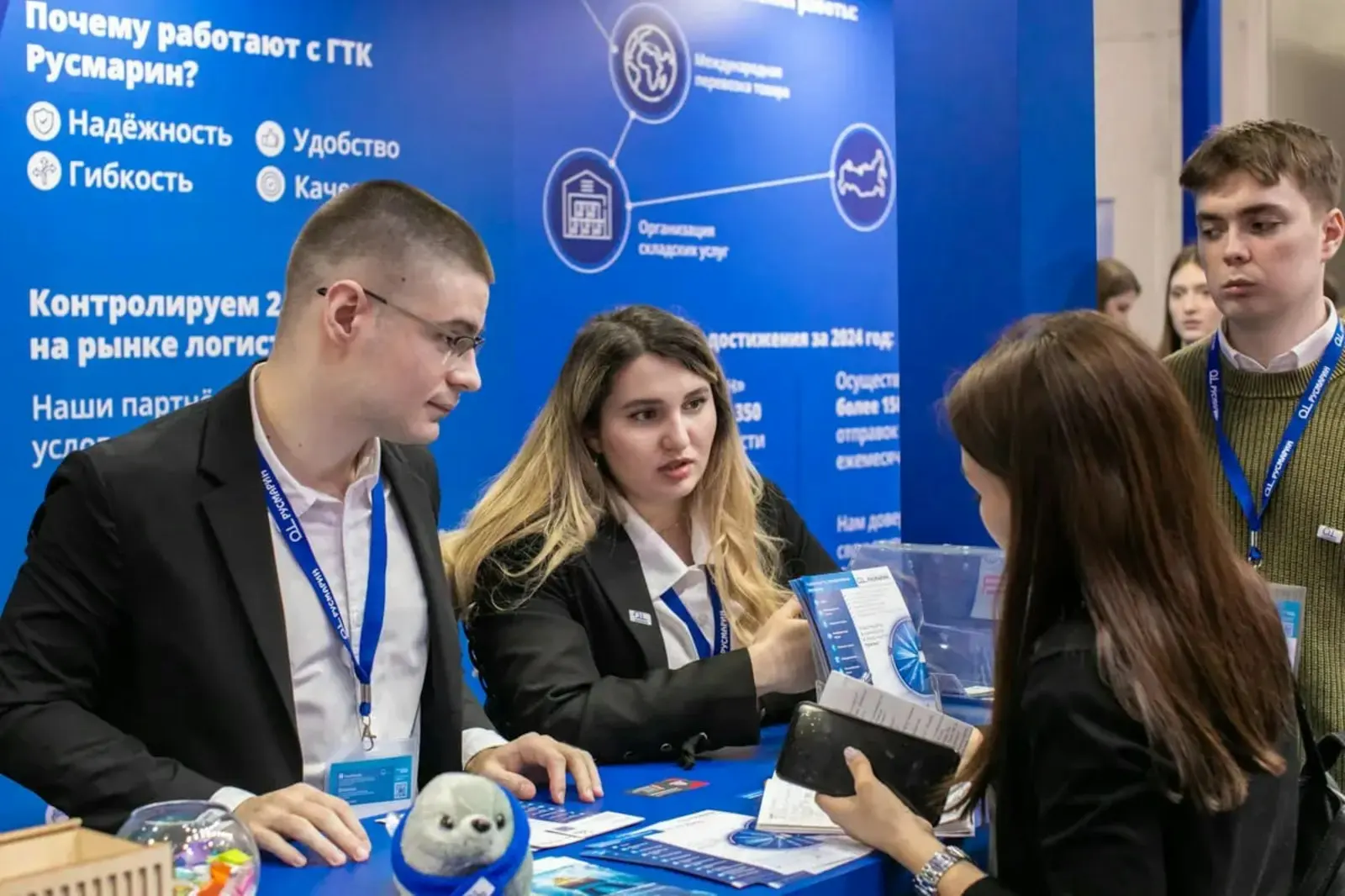
Freeman's 2025 research found 84% of attendees say connecting with a subject matter expert is extremely or very important, yet only 26% of exhibitors see SME interaction as beneficial, versus 58% of attendees. Also, 93% of attendees say capable booth staff is extremely important while only 78% feel exhibitors deliver. Staff the stand with at least one person who can answer the hard technical question.
- One clear headline readable from the aisle: what you do and for whom.
- A hands-on element. In the same Freeman report, 96% said hands-on experience made it easier to advocate for a purchase.
- Three qualification questions every staffer asks, recorded in the lead app, not on paper.
- Pre-booked meetings get a seat and a screen; walk-ups get a quick demo and a scan.
- Shifts of no more than three hours so energy stays up.
Our booth design and event collateral teams build to these rules.
 06
Content Capture At The Event
A conference is the one time your CEO, customers and investors are in the same building. Plan content before you travel, with a shot list and a named owner, or it will not happen.
| Asset | Capture on site | Publish by |
|---|---|---|
| Presentation replay | Webcast link from organizer, or your own recording where allowed | T+1 on IR site and investor newsletter |
| CEO short video | 60 to 90 seconds answering the most common question heard that day | T+3 on LinkedIn and IR site |
| Panel or keynote clips | 3 to 5 clips of 30 to 60 seconds | T+3 to T+14 on social |
| Photo set | Stage, booth, team, customer conversations with consent | T+1 for recap post |
| Recap article | Notes on top questions and themes | T+7 on blog or newsroom |
| Customer testimonial | Short on-camera quote with a signed release | T+14 after approval |
Planning template. Check organizer rules on recording and always get written consent from anyone on camera.
For investor events, route every clip and post through the same disclosure review as the slides. For both event types, a single editor producing assets overnight beats a large batch three weeks later. Our event video coverage team works this way.
 07
Follow-Up Speed And Cadence
Speed matters more than polish. Harvard Business Review's audit of 2,241 US companies found firms that tried to contact a lead within an hour were nearly seven times as likely to qualify it as those that waited even an hour longer, and more than 60 times as likely as firms that waited 24 hours or more. The same study found 23% of companies never responded at all. The data is on online leads, not booth scans, but the lesson transfers: the conversation is warmest the same day.
The best follow-up note we ever sent was three lines long and went out before the CEO had reached the airport. It answered the one question the investor asked, linked the page in the 10-Q, and offered a CFO call. Polish is what you do at T+7.
Umair AnsariCo-founder, Growth Partner, Dart MarketingMore likely to qualify a lead when contacted within an hour versus after 24 hours or more
Harvard Business Review, Mar 2011The Cadence
| When | Who gets it | What |
|---|---|---|
| Same day | Every 1x1 and A-tier booth conversation | Personal thank-you with the one thing you promised |
| T+1 | All meetings and investors who requested but missed a slot | Replay link, deck, offer of a call |
| T+3 | B and C-tier scanned leads | Short recap email with one relevant asset |
| T+7 | A-tier with no reply | Second touch with new public information or a case study |
| T+14 | Engaged contacts | Book second meeting, model call or demo |
| T+30 | Everyone not yet engaged | Move to regular newsletter or nurture track |
Cadence template.
Investor Follow-Up Template
Subject: Follow-up from [Conference]: [the specific question]
Hi [First name], thank you for the time at [Conference]. You asked about [topic]. The public detail is in [document and page], and the replay of our presentation is here: [link]. Would a 30-minute call with our CFO in the next two weeks be useful? [Name]
Pair the email with a post-event follow-up sequence in your CRM and a shareholder email for investors on your list.
 08
Measuring ROI
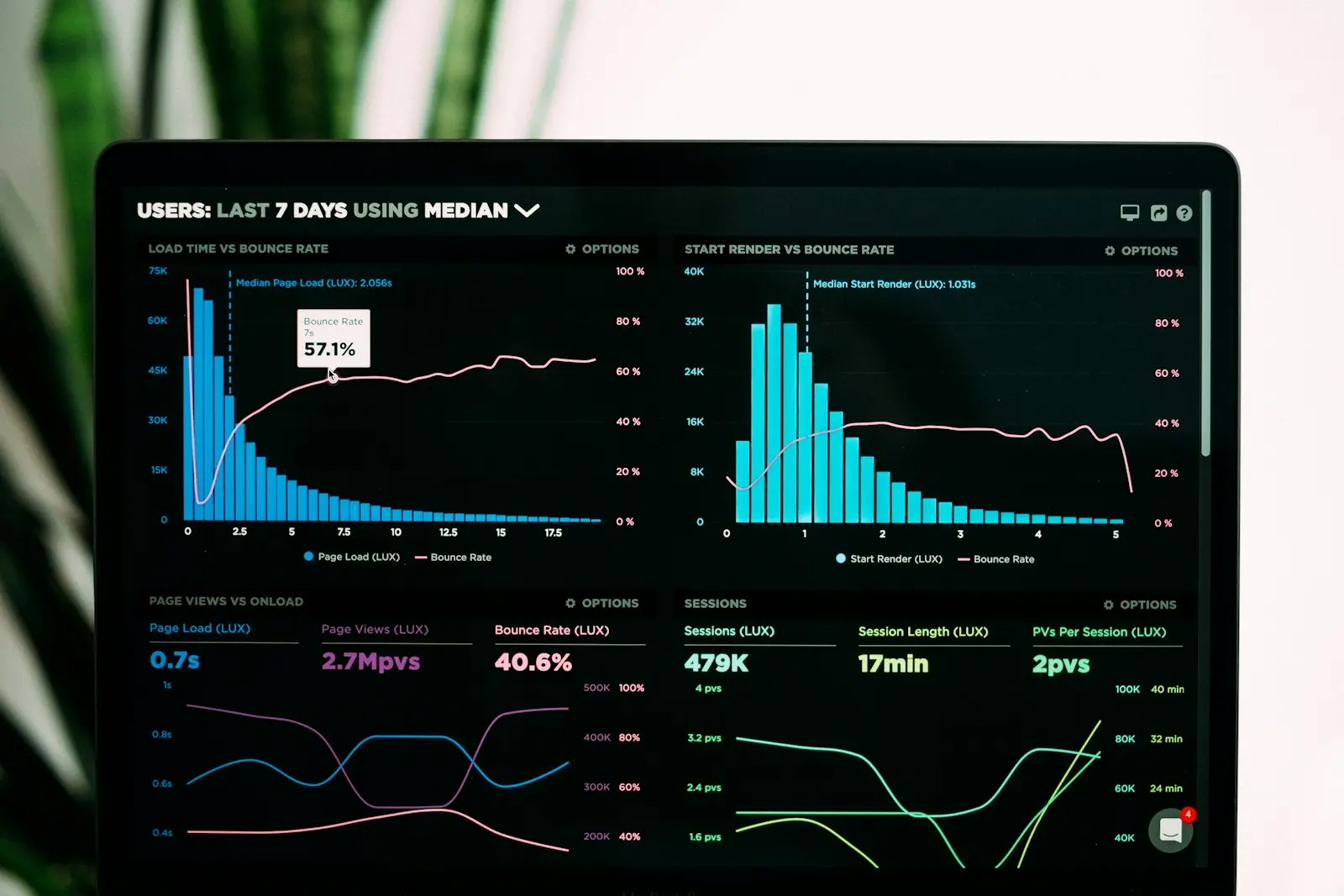
Count every cost, including staff time, and attribute only outcomes you can trace to a conversation at the event. For trade shows, measure gross profit, not revenue. For investor events, dollar ROI is harder, so measure cost per qualified meeting and conversion to second meetings.
Total event cost = fees or space + booth and materials + travel + staff time (hours x loaded hourly rate) + promotion
Trade show ROI = (gross profit from event-sourced deals - total event cost) / total event cost
Investor event cost per qualified meeting = total event cost / 1x1s held with investors who fit your target profile
Worked Example: Trade Show
These numbers are illustrative. Say space costs $6,000. CEIR data puts space at about 40.5% of exhibitor spend, so a full budget is roughly $6,000 / 0.405 = $14,815. The team scans 120 badges and qualifies 40.
- Cost per lead: $14,815 / 120 = $123.46
- Cost per qualified lead: $14,815 / 40 = $370.38
- Opportunities within 30 days: 10 (25% of qualified leads)
- Deals won within two quarters: 2, each worth $30,000 in first-year gross profit, so $60,000
- ROI: ($60,000 - $14,815) / $14,815 = 3.05, or 305%
Worked Example: Investor Conference
Again illustrative. A presenting fee of $6,995 (NobleCon21's published fee), plus $3,500 for travel and $1,500 for materials, totals $11,995. The company holds 14 1x1s, in line with Planet MicroCap's published average, and 10 are with investors in its target profile.
- Cost per 1x1: $11,995 / 14 = $856.79
- Cost per qualified meeting: $11,995 / 10 = $1,199.50
- Second meetings booked by T+30: 4, so 40% of qualified meetings converted
- Cost per second meeting: $11,995 / 4 = $2,998.75
Track new institutional holders in the next 13F cycle and compare against the meeting list. That is correlation, not proof, but across several events it shows which organizers bring the investors who buy. Use our stock sentiment tracking to watch volume and mentions around the event.
 09
The Conference Checklist
How Dart Can Help
Dart runs the full conference cycle for public companies and B2B exhibitors: conference strategy and event selection, pre-show outreach, investor presentations, booth design, event video and post-event follow-up. See investor conference support or conference and event marketing to start.
Book a strategy callPut it to work


Related servicesInvestor conference support for small and mid-cap public companies.Conference strategy that picks the right shows and sets goals you can measure.Pre-show outreach that books meetings before the doors open.Trade show booth design built around demos and conversations, not just graphics.Event video and live coverage that keeps a three-day show working for months.Post-event follow-up that turns badge scans into booked meetings and pipeline.
Sources
- CEIR via Trade Show Executive, CEIR's 2026 Marketing Spend Decision Report Affirms the Power of B2B Exhibitions, May 2026
- CEIR via Trade Show Executive, CEIR Releases Exhibitor Spending Report, Apr 2026
- IAEE, IAEE Releases 2026 CEIR Index Report, May 2026
- Freeman, Freeman Commercial Trends Report 2025, Apr 2025
- Trade Show Executive, New Freeman Trends Report Reveals Commerce Is the Top Reason for Attending In-Person Events, Apr 2025
- Planet MicroCap, Join 525+ Investors and 140 Companies in Las Vegas, Jun 2026
- Planet MicroCap, Planet MicroCap: Microcap Investor Events and Media, Sep 2026
- Noble Capital Markets, NobleCon21 Presenting Company Registration, Sep 2025
- GlobeNewswire, Streamex Corp. to Present at Sidoti's Small-Cap Virtual Investor Conference September 23, 2026, Sep 2026
- iCrowdNewswire, Water Tower Research (WTR) Kicks Off Virtual Insights Conference, Sep 2026
- Investor Summit Group, Investor Summit: MicroCap Conference, Aug 2026
- IR Impact, 3,520 days of travel: How investor relations teams tackled roadshows last year, Feb 2026
- Harvard Business Review, The Short Life of Online Sales Leads, Mar 2011
- US Securities and Exchange Commission, Regulation FD: Compliance and Disclosure Interpretations, Jun 2010
- Comstock Inc. (press release), Comstock to Participate in the 20th Annual LD Micro Main Event, Oct 2026
- US Securities and Exchange Commission (Federal Register), Semiannual Reporting, proposed rule (Form 10-S), May 2026
Figures are from the sources listed, as of the dates shown. Nothing here is legal, tax or investment advice.