Investor Relations Is Becoming AI Relations: A Small-Cap Guide
Institutional and retail investors now ask an AI engine about your company before they open a filing. For a small cap with thin analyst coverage, that answer is the first meeting, and most companies have never read it.
GrowthNov 10, 20266 min read By Umair Ansari

On this page
Investors Already Research This Way
The Brunswick Group 2026 investor survey, cited by IR platform Q4 when it launched answer engine optimisation for IR websites in March, found institutional investors use generative AI to summarise financial news (57%), find specific answers (50%), compare companies' financial performance (49%), research new ideas (42%) and replace internet search (38%).
On the retail side, a July study from Virgo PR of 1,247 self-directed investors reported that two-thirds of those who traded a microcap in the past year researched it in an AI engine before opening the 10-K. The same study put the median variance between engines at 34%, and said 31% of investors abandoned a ticker after catching one verifiable error in an AI answer. That study comes from a PR firm and has not been independently verified, so treat the figures as directional. The direction matches what we see.
The IR Platforms Are Building For This
Q4 says its platform runs IR websites for more than half of the S&P 500. In March it made answer engine optimisation a standard part of that product at no extra cost: automated schema, automatic tagging of press releases, earnings events, leadership bios and filings, and metadata intended to mark the IR site as the verified source of corporate disclosures. The same release cites Bain research that 80% of people rely on AI-written results for at least 40% of their searches, and a Gartner report from December 2025 on how finance chiefs use AI to compete in capital markets.
When the largest IR website vendor makes something a default feature, it stops being an experiment. Large caps will get this without asking. A small cap on a custom site, or on a basic template, has to do it deliberately.
Why Small Caps Are Exposed
A large cap has dozens of analysts, a deep news archive and a well-linked Wikipedia page. An AI engine has plenty of consistent material to draw on. A small cap often has an IR site, a handful of releases and a set of filings written for lawyers. When the engine cannot find a clear description, it fills the gap with aggregators, old articles and, sometimes, a competitor's framing.
The three errors we look for first when we review a listed company are an out of date description of what the company does, a wrong exchange or ticker after an uplisting, and financial figures taken from a superseded period. Each one is small. Each one is the kind of error that ends a retail investor's research.
The Monthly AI Check
This takes an IR lead about an hour a month.
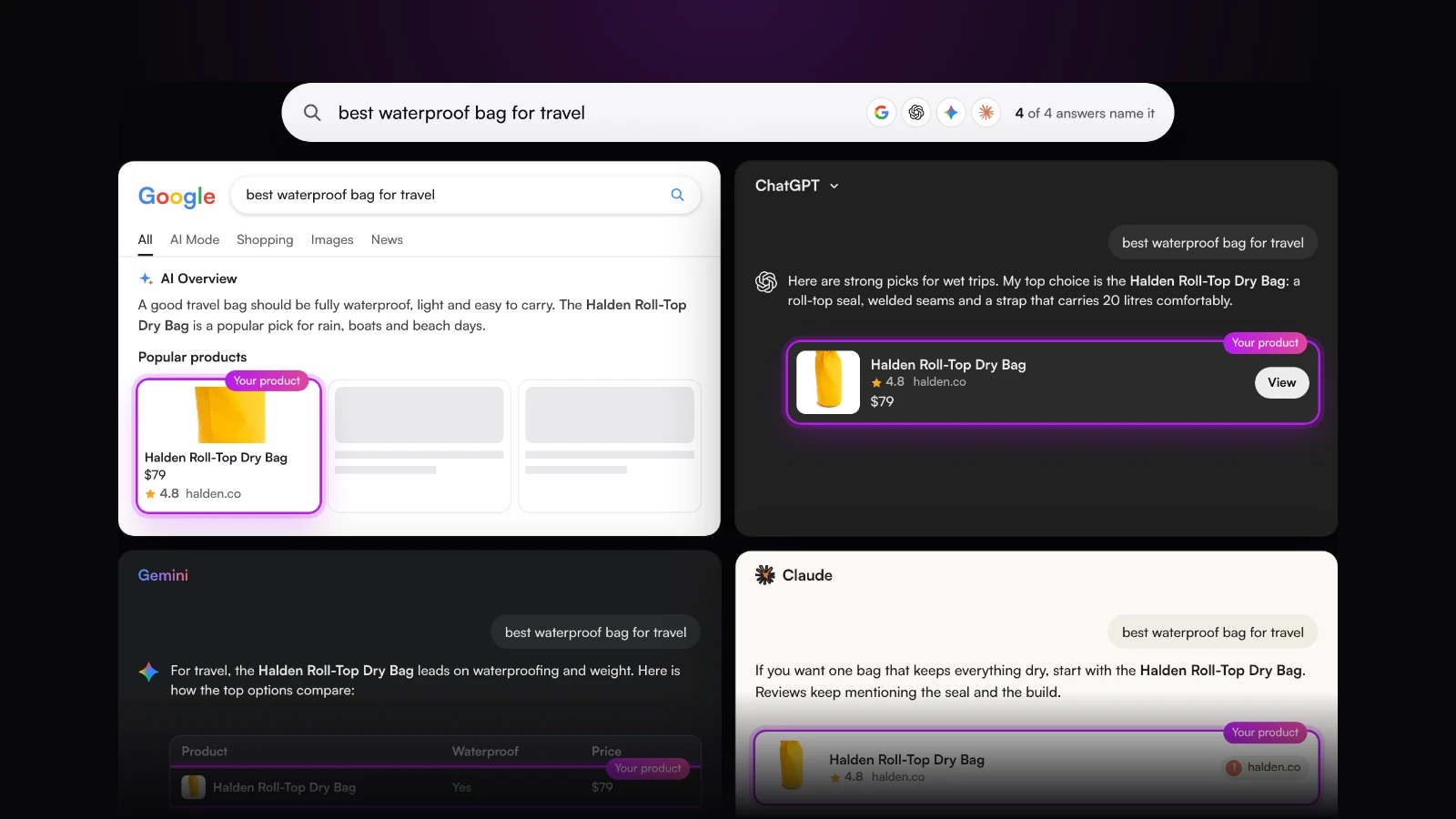
- Ask the four engines the same ten questions. ChatGPT, Perplexity, Gemini and Claude. What does the company do, where is it listed, who runs it, what were last quarter's results, who are its competitors, what are the risks.
- Record the answers and the sources cited. The sources tell you what to fix. If the engine is quoting an aggregator, your own page is not doing its job.
- Mark every factual error. Ticker, exchange, market cap, product names, leadership, dates.
- Fix the source, not the engine. Correct your own pages and filings language first, then ask the third-party sites to update.
Ten Questions To Ask Every Engine
- What does the company do?
- Where is it listed, and what is its ticker?
- Who are the chief executive and the chief financial officer?
- What were revenue and net income in the latest reported quarter?
- What is its market capitalisation?
- Who are its main competitors?
- What are the biggest risks for the company?
- What has the company announced in the last three months?
- Is the stock a good investment?
- What do investors say about the company?
On question nine you are not looking for the verdict. You are looking at which facts and which sources the engine reaches for. Ask each question in a fresh session, with web search switched on where the engine offers it, and save the answers with the date. The month to month comparison is where the value is.
Make The IR Site The Source
AI engines favour pages that state facts plainly and consistently. The fixes are unglamorous.
- One two-sentence description, used everywhere. The same wording on the IR home page, the boilerplate of every release, the deck and the opening of the 10-K business section. Consistency is what the engines pick up.
- A facts page. Exchange, ticker, sector, headquarters, fiscal year, leadership, latest reported quarter, each as plain text with the date it was last updated.
- Structured data. Organization and Corporation schema with the ticker, plus markup on releases, events and leadership pages.
- Investor questions, answered. A question and answer page built from what investors actually ask on calls and by email.
- Results as text. Key figures in HTML on the results page, not only inside a PDF.
None of this changes what you disclose. It only makes public information easier to read, so the same disclosure rules and the same counsel review apply. Our small-cap IR marketing playbook covers the compliance boundaries in detail.
Correct The Third-Party Profiles
Engines lean on whatever describes you most plainly, and for a small cap that is often not your own site. The Virgo article names Yahoo Finance ticker pages, Seeking Alpha articles and Reddit threads as the sources that have shaped first impressions of small companies, and gives a market cap that is 20% out and revenue credited to the wrong segment as examples of the errors. Its strongest single predictor of visibility was a two-sentence business description repeated word for word across channels.
- Exchange and finance portal profiles. Check the description, sector and officers. Many portals take corrections through the data vendor that supplies them, so ask which one.
- Company pages you control. LinkedIn, Crunchbase and similar profiles should carry the same two sentences as the IR site.
- Wikipedia, if you have a page. Do not edit it yourself. Raise corrections on the article's talk page with a public source, and say who you are.
- Old releases and decks. Add a dated note to superseded material, or move it to an archive, so an engine does not quote last year's guidance as current.
Who Owns It, And What Not To Do
Someone has to own this, and there is no settled answer on who. The reporting lines in use are investor relations, corporate communications and the chief of staff's office. For most small caps the IR lead is the natural owner, with communications and counsel in the loop.
Keep three limits in view:
- Nothing new goes on the site first. A question and answer page restates what is already public. Material information still goes out through a release or a filing before it appears anywhere else.
- Do not paste non-public information into an AI tool to see how it would answer. Test with public facts only.
- Do not chase a verdict. The aim is accurate facts and current sources. Trying to engineer a favourable opinion is promotion, and promotion of a listed stock is regulated.
Where Dart Fits
We design IR websites, investor presentations and earnings content for listed companies, including Birchtech on NYSE American and Braiin on Nasdaq, and we publish our own microcap newsroom, MicroCap Desk. We run the AI check above when we review a listed company's investor story. If you want to see what the engines say about your ticker, the free stock sentiment report is a quick first look at the retail conversation around it.
Sources
- Q4 Inc.: Q4 launches AEO for IR Web, March 3, 2026, citing the Brunswick Group 2026 investor survey
- Everything-PR: Investor relations is becoming AI relations, July 23, 2026, citing the Virgo PR retail investor study
Related servicesInvestor relations marketingFinancial services and IR